

Welcome To Christian Faith Money

Info Box

ChristianFaithMoney is a Christian personal finance blog helping beginners manage money using biblical principles. Learn Christian budgeting, debt freedom strategies, faith-based financial planning, and Godly money habits to honor God and build lasting financial peace.
This site contains affiliate links. If you click on a link and make a purchase, I make a commission without any additional charge to you! Blessing’s to you! Thanks for visiting my site!

  • How to Budget Your Paycheck So It Lasts Until Payday

    Learning how to budget your paycheck should not feel like trying to solve a complicated math problem.

    You should not need ten spreadsheets, several apps, or a perfect financial life to make a plan for your money.

    You need a simple routine that helps you see what is coming in, what needs to be paid, and what you can safely spend before your next payday.

    If you get paid and feel hopeful for a day or two—but then start wondering where all your money went—you are not alone.

    Bills come out. Groceries cost more than expected. You stop for takeout because you are tired. A child needs something for school. The car needs gas. Then an expense you did not plan for appears.

    Suddenly, payday feels far away again.

    That does not always mean you are careless with money. Often, it means your paycheck did not have a clear plan before the spending began.

    A paycheck budget planner can help you slow down, look at the real numbers, and make one decision at a time.

    You do not have to fix everything today. Start with your next paycheck.

    Why Your Paycheck May Disappear So Quickly

    Many traditional budgets are built around an entire month.

    That can work for some people, but it can feel confusing when your bills and income do not arrive at the same time.

    You may get paid every Friday, every two weeks, twice a month, once a month, or on an irregular schedule. Meanwhile, your rent, utilities, insurance, groceries, and other needs all have different due dates.

    A monthly total does not always tell you which bill should come out of which paycheck.

    That is why budgeting by paycheck can feel easier.

    Instead of trying to control the whole month at once, you ask:

    What does this paycheck need to do before the next one arrives?

    That question gives you a smaller, clearer starting point.

    Start Your Paycheck Plan With Prayer and Honesty

    Christian budgeting is not about pretending that prayer will make every bill disappear.

    It is also not about feeling ashamed when the numbers are difficult.

    Prayer can help you slow down, face the truth, and ask God for wisdom before making decisions.

    Before you begin your paycheck budget, take a quiet moment and pray something simple:

    Lord, thank You for what You have provided. Help me look at my money honestly and make wise choices. Show me what needs to be paid first. Give me peace, discipline, and wisdom for my next step. Amen.

    Then look at the numbers as they are—not as you wish they were.

    Write down:

    • The amount you expect to receive
    • Your current bank balance
    • Bills due before your next payday
    • Food and transportation needs
    • Any urgent expenses you already know about

    You cannot build a clear plan around numbers you are avoiding.

    Honesty is not failure. It is where change begins.

    How to Budget Your Paycheck in Five Simple Steps

    You do not need to complete dozens of worksheets every payday.

    A useful paycheck budget can be created with five simple steps.

    Step 1: Write Down Your Real Take-Home Pay

    Start with the amount that will actually reach your bank account.

    Do not use your gross income before taxes, insurance, or other deductions. Use your expected take-home pay.

    Include every source of income arriving during this pay period, such as:

    • Your regular paycheck
    • Overtime
    • Side work
    • Child support
    • Benefits
    • Any other dependable income

    If your pay changes from week to week, use the lowest amount you reasonably expect.

    It is easier to adjust your plan when extra money arrives than to build a plan around money that may not come.

    Step 2: List Bills Due Before Your Next Payday

    This part is important: do not automatically list every bill for the entire month.

    List the bills that need to be paid before your next paycheck arrives.

    For example, imagine you are paid on May 1 and again on May 15.

    Your first paycheck may need to cover:

    • Rent due May 3
    • Electricity due May 5
    • Car payment due May 7
    • Insurance due May 8
    • Internet due May 10

    A bill due on May 20 may belong in the plan for your next paycheck.

    This helps you avoid using your first paycheck for expenses that could wait while forgetting something urgent that is due sooner.

    Write the due date and amount beside each bill. Then mark it paid after the payment is made.

    That simple action can reduce a lot of mental clutter.

    Step 3: Pay What Matters First

    When money feels tight, everything can feel urgent.

    However, some expenses protect your safety and daily life more than others.

    A simple order of priority may look like this:

    1. Housing and urgent safety needs
    2. Food, medicine, childcare, and transportation
    3. Utilities, insurance, and required minimum payments
    4. A small amount of money for surprises
    5. Extra savings and debt payments
    6. Wants and purchases that can wait

    Your situation may be different, but the main idea is to protect the basics first.

    This does not mean your savings or debt goals are unimportant. It means you should not make a large extra debt payment and then discover you cannot buy groceries or get to work.

    Wise progress protects your home while helping you move forward.

    Step 4: Create a Weekly Spending Plan

    Bills are only part of your paycheck.

    Everyday spending can quietly use the rest.

    A weekly paycheck budget helps you decide how much is available for things such as:

    • Groceries
    • Gas or transportation
    • Household needs
    • Personal spending
    • Eating out
    • Small miscellaneous expenses

    Suppose you have $300 available for two weeks of everyday spending.

    Instead of thinking, “I have $300 left,” divide it into smaller limits.

    You might plan:

    • Week one: $150
    • Week two: $150

    Or you could separate it further:

    • Groceries: $180
    • Gas: $70
    • Household or miscellaneous needs: $50

    The exact numbers will depend on your income and household.

    The point is to give the money a limit before it becomes a series of small, unplanned purchases.

    Step 5: Review the Paycheck Without Shame

    A paycheck budget is not finished when you write it down.

    Before the next payday, look back and ask:

    • What went well?
    • Which bill was paid?
    • Where did I spend more than planned?
    • Is there any money left?
    • What is one small change I can make next time?

    Do not use your review to criticize yourself.

    Use it to learn.

    Perhaps you spent more on takeout because there was no easy food at home. Your next step could be planning two simple meals before payday.

    Maybe gas cost more than expected. Your next plan can include a larger transportation amount.

    Perhaps you stayed under your weekly limit. Celebrate that progress.

    A budget should help you make better decisions—not make you feel worse about yourself.


    Need a Simple Paycheck Budget Planner?

    The Christian Paycheck Reset System was created for people who want clear instructions—not another stack of confusing blank pages.

    This 68-page faith-based printable workbook gives you a simple five-page routine to use each payday:

    • Payday Preparation Checklist
    • Paycheck Plan
    • Bills to Pay
    • Weekly Spending Plan
    • Payday Review

    Each main worksheet includes a completed example before the blank page, so you can see exactly what to write.

    You will also receive a 30-Day Money Reset, prayer and Scripture encouragement, and optional guides for overdue bills, surprise expenses, overspending, irregular income, debt, savings, groceries, and other real-life money problems.

    Instant digital download • Printable PDF • Designed for US Letter paper

    START MY PAYCHECK RESET


    A Simple Paycheck Budget Example

    Here is an example of how a $2,000 paycheck could be planned.

    Your own numbers may look completely different. This example is only meant to show how every dollar can receive a job.

    Total income: $2,000

    • Giving: $100
    • Savings: $100
    • Money for surprises: $100
    • Bills due before next payday: $1,200
    • Groceries and gas: $350
    • Extra debt payment: $100
    • Personal spending: $50

    Total planned: $2,000

    Nothing is left floating around without a purpose.

    That does not mean you need to spend all the money immediately. It means you know what each amount is supposed to do.

    The savings money stays in savings.

    The grocery money is available for groceries.

    The bill money is protected for bills.

    The money for surprises is there when an unplanned need happens.

    This is the heart of a budget-by-paycheck system: every dollar has a job before everyday spending begins.

    What Is “Money for Surprises”?

    Many budgeting systems call this a buffer.

    However, “money for surprises” may feel easier to understand.

    This is a small amount set aside for expenses that were not in your original plan.

    It might cover:

    • A higher utility bill
    • Medicine
    • A school expense
    • An unexpected transportation cost
    • A household item that needs to be replaced

    Without this category, one small surprise can throw off the entire paycheck.

    You may not be able to set aside a large amount. Even $10 or $20 can be a beginning.

    When you do not use it, you can leave it for the next paycheck or move it toward savings.

    How to Budget a Biweekly Paycheck

    A biweekly paycheck budget follows the same five-step process.

    The biggest difference is that your money may need to cover two weeks of bills and everyday spending.

    Begin by writing your next payday date.

    Then list every bill due between this payday and the next one.

    After the bills are planned, divide your food, gas, and miscellaneous money between the two weeks.

    For example, if you have $400 for everyday spending, avoid treating the full $400 as available during the first week.

    You could divide it like this:

    • Week one spending: $200
    • Week two spending: $200

    Some months will include three paychecks instead of two. Do not automatically treat the extra paycheck as spending money.

    Look ahead for:

    • Next month’s rent
    • Annual or irregular bills
    • Car repairs
    • Emergency savings
    • Debt payments
    • Upcoming holidays or school expenses

    An “extra” paycheck can help you prepare for future needs.

    What If Your Income Changes?

    Irregular income can make budgeting feel uncertain, but you can still create a plan.

    Start with the lowest dependable amount you expect to receive.

    Use that amount to protect:

    • Housing
    • Utilities
    • Food
    • Transportation
    • Insurance
    • Minimum required payments

    When extra income arrives, give it a job instead of spending it without a plan.

    You may decide to use the additional money for:

    • A bill due later
    • Money for surprises
    • Savings
    • Debt
    • An upcoming irregular expense

    This approach can make your plan feel safer because it is not built around your best possible income month.

    Common Paycheck Budgeting Mistakes

    Trying to Fill Out Too Many Pages

    More worksheets do not always create more clarity.

    Start with the five core pages. Use optional worksheets only when they solve a specific problem.

    For example, use an expense tracker when you do not know where your money is going. Use a debt page when you are working on a debt goal.

    You do not need every tool every payday.

    Forgetting Small Purchases

    A few small purchases may not seem important, but they add up.

    Coffee, convenience-store stops, app purchases, and takeout can quietly use money planned for something else.

    You do not have to remove every enjoyable purchase. Add a realistic amount to your plan instead.

    Creating a Plan That Is Too Strict

    A budget that leaves no room for real life can be difficult to follow.

    Include realistic food, transportation, and personal spending amounts.

    Also include money for surprises when possible.

    A plan should guide you, not punish you.

    Giving Up After One Difficult Paycheck

    One hard week does not mean the system failed.

    Budgets need adjustments.

    Your grocery amount may need to change. A bill may increase. Your income may be different.

    Review the plan, make one change, and begin again with your next paycheck.

    Christian Budgeting Is About Faithfulness, Not Perfection

    Managing money as a Christian is not about proving that you are worthy of God’s help.

    It is not about becoming wealthy overnight.

    It is about learning to be honest, prayerful, wise, and faithful with what is in your hands today.

    Some paychecks will feel easier than others.

    Sometimes you will make progress. Other times, all you can do is protect the basics.

    Both seasons require wisdom.

    You can pray and still make a written plan.

    You can trust God and still check your bank balance.

    You can have faith and still call a company to ask about a payment arrangement.

    Practical action does not replace faith. It can be part of faithful stewardship.

    Build the Habit One Paycheck at a Time

    You do not need to master budgeting in one month.

    Begin with one paycheck.

    Gather your numbers.

    List what is due.

    Plan your weekly spending.

    Set aside what you can.

    Review what happened.

    Then repeat the process.

    Over time, this routine can help you feel less surprised by your money and more prepared for payday.

    You may still face difficult expenses. A paycheck plan cannot prevent every emergency or solve every income problem.

    However, it can give you a clear next step when everything feels scattered.

    That clarity matters.


    Ready to Reset Your Next Paycheck?

    The Christian Paycheck Reset System gives you the structure, examples, and encouragement to stop guessing and begin planning.

    Inside the 68-page printable workbook, you will find:

    • Five core payday worksheets
    • Filled examples before the blank pages
    • A 30-Day Money Reset
    • Bill, spending, debt, and savings tools
    • Help for irregular income and overdue bills
    • Prayer and Scripture encouragement
    • Optional Money Problem Guides

    You do not need to complete all 68 pages.

    Print the five core worksheets for your next payday. Keep the completed examples nearby. Then use the optional pages only when you need extra help.

    [GET THE CHRISTIAN PAYCHECK RESET SYSTEM]

    Instant digital download. Nothing will be mailed. This is a printable PDF designed to be completed by hand.

    Start with prayer.

    Make one clear plan.

    Take one wise step.

    Then do it again next payday.

  • Free Weekly Paycheck Budget Printables for Beginners

    Use these free weekly paycheck budget printables to plan your bills, groceries, savings, giving, and spending before your next payday.

    When your paycheck disappears too quickly, it can feel as though you never have enough time to get ahead. You get paid, cover a few bills, buy groceries, fill the gas tank, and suddenly wonder where the rest of your money went.

    You are not alone, and you do not need a complicated spreadsheet to begin making progress.

    These beginner-friendly paycheck printables will help you slow down, pray over your money, and create a simple plan for the week ahead. Instead of guessing where your money went, you can decide where it should go before you begin spending.

    What’s Included in Your Free Paycheck Budget Planner

    These free paycheck budget printables give you a simple way to organize your money one week and one paycheck at a time.

    Your printable set includes:

    • A weekly paycheck planning worksheet
    • A weekly spending tracker
    • A 7-day Paycheck Peace Challenge
    • A faith-based money reminder

    The paycheck planning worksheet includes space for your income, bills, giving, savings, debt payments, groceries, gas, household needs, and personal spending.

    The weekly spending tracker helps you record purchases throughout the week so you can see where your money is actually going.

    The 7-day Paycheck Peace Challenge gives you one small step to complete each day. It can help you pray over your finances, check your spending, plan meals, review bills, and avoid unnecessary purchases.

    These pages were created for beginners, busy women, families, and anyone who feels stressed about making money last until payday.

    Download The Free Paycheck Budget Printables

    Why a Weekly Budget Planner Can Help

    A monthly budget can be helpful, but planning an entire month may feel overwhelming when money is already tight.

    You may be trying to cover:

    • Rent or mortgage payments
    • Utilities
    • Groceries
    • Gas
    • Insurance
    • Debt payments
    • Family expenses
    • Unexpected costs

    A weekly budget planner makes the process feel smaller and more manageable.

    Instead of trying to solve everything for the entire month, you focus on the money you have available right now. You look at one paycheck, one week, and one set of upcoming expenses.

    A weekly paycheck budget can help you answer questions such as:

    • Which bills are due before my next paycheck?
    • How much should I set aside for groceries and gas?
    • Can I put anything toward savings or debt?
    • Which purchases can wait?
    • What financial decisions do I need to pray about?

    When you can see your money clearly, it becomes easier to make thoughtful decisions.

    For more help building your plan, read How to Budget Your Paycheck So It Lasts Until Payday.

    Why Your Money Disappears Before Payday

    Feeling broke before payday does not always mean you are irresponsible with money.

    Sometimes your paycheck is stretched too thin. Your bills may not be organized by their due dates, or several small purchases may be using more of your income than you realize.

    You may also be trying to remember every bill and expense in your head.

    Without a written plan, money can begin leaving your account before you have decided what matters most.

    A paycheck budget printable puts your income, bills, and spending in one place. It helps you notice patterns and identify where changes may be needed.

    You might discover that:

    • Subscriptions are costing more than expected.
    • Several small purchases are adding up.
    • Grocery spending needs a clearer limit.
    • Bills need to be divided between paychecks.
    • Savings is being treated as whatever is left over.
    • Unplanned spending is using money needed later in the week.

    The purpose of a budget is not shame. The purpose is clarity.

    Once you understand where your money is going, you can begin making wiser choices.

    How to Use the Weekly Paycheck Printable

    Print the pages before your next payday. You can use them weekly, every time you are paid, or whenever your finances feel unorganized.

    1. Begin with prayer

    Before writing down numbers, take a quiet moment to pray.

    Ask God for wisdom, discipline, peace, and direction. You do not have to approach your budget with panic or fear.

    A simple prayer could be:

    Lord, thank You for providing for me. Please give me wisdom as I plan this paycheck. Help me make thoughtful decisions, avoid unnecessary spending, and handle what You have placed in my care faithfully. Amen.

    2. Write down your paycheck amount

    Record the amount that is actually available after taxes and other deductions.

    Use the money you received, not the amount you expected to receive.

    3. List bills due before your next payday

    Write down every required payment that must be made before you are paid again.

    This may include:

    • Rent or mortgage
    • Utilities
    • Phone bill
    • Insurance
    • Subscriptions
    • Minimum debt payments
    • Childcare
    • Transportation costs

    Include each bill’s due date so nothing is overlooked.

    4. Plan your weekly needs

    Next, estimate how much you will need for necessities such as:

    • Groceries
    • Gas
    • Medicine
    • School expenses
    • Household supplies
    • Family needs

    Try to give each category a realistic spending limit.

    5. Plan giving, savings, and debt payments

    Decide what you can reasonably put toward giving, savings, or extra debt payments.

    Even a small amount can help you build consistency.

    Do not become discouraged if you cannot contribute to every goal during every paycheck. Begin with what is possible today.

    6. Give the remaining money a purpose

    After subtracting your bills and necessities, decide what the remaining money should do.

    You may choose to use it for:

    • Emergency savings
    • Debt repayment
    • A future bill
    • A sinking fund
    • Planned personal spending

    When every dollar has a purpose, you are less likely to spend money accidentally.

    Simple Weekly Paycheck Budget Example

    Here is an example of how one paycheck could be planned.

    Paycheck income: $800

    Bills due

    • Rent portion: $300
    • Phone bill: $65
    • Electric bill: $90

    Total bills: $455

    Weekly necessities

    • Groceries: $125
    • Gas: $50
    • Household items: $25

    Total necessities: $200

    Giving, savings, and debt

    • Giving: $40
    • Savings: $25
    • Extra debt payment: $50

    Total: $115

    Remaining money

    • Planned spending: $30

    The full $800 paycheck now has a purpose.

    This does not mean unexpected expenses will never happen. It means you have created a starting plan instead of waiting until the money is gone to ask what happened.

    Track Your Spending During the Week

    The weekly spending tracker is one of the most important pages in this printable set.

    Use it to write down what you purchase during the week, including small expenses.

    A quick snack, drink, online order, or unplanned store visit may not seem important by itself. But several small purchases can quietly use money that was meant for groceries, gas, or an upcoming bill.

    Record:

    • The date
    • What you purchased
    • The spending category
    • The amount
    • Whether the purchase was planned

    At the end of the week, review your tracker and ask:

    • Where did most of my money go?
    • Which purchases were necessary?
    • Which purchases were unplanned?
    • What should I change next payday?
    • Which spending habits should I pray about?

    Tracking your spending is not meant to make you feel guilty. It helps you become more aware so you can make better decisions in the future.

    Take the 7-Day Paycheck Peace Challenge

    Money stress can make you feel rushed, discouraged, or afraid.

    The 7-day Paycheck Peace Challenge helps you focus on one small action each day rather than trying to fix everything at once.

    During the challenge, you can:

    • Pray over your paycheck
    • Review upcoming bills
    • Track your purchases
    • Plan affordable meals
    • Avoid impulse spending
    • Check your remaining balance
    • Thank God for His provision

    Christian budgeting is about more than numbers. It is also about stewardship, wisdom, contentment, and learning to trust God while taking practical action.

    You do not have to solve every financial problem in seven days. You only need to take the next faithful step.

    Christian Budgeting Is About Stewardship, Not Perfection

    Money can be emotional.

    You may feel embarrassed about debt, frustrated by past decisions, or discouraged because you are trying hard and still feel behind.

    Budgeting is not about proving that you are perfect with money. It is about becoming more intentional with what you have today.

    God cares about the pressure you feel when bills are due. He understands the stress of trying to stretch a paycheck across many needs.

    A Christian budget gives you space to pause and ask:

    Lord, how can I manage this money with wisdom?

    You can pray before spending. You can seek wisdom before making a purchase. You can plan before payday instead of reacting after the money has already been spent.

    Small, faithful steps still matter.

    Download the Free Weekly Paycheck Budget Printables

    Download these free weekly paycheck budget printables and use them before your next payday.

    They can help you:

    • Plan your paycheck
    • Organize your bills
    • Prepare for groceries and gas
    • Track weekly spending
    • Set aside money for savings or debt
    • Reduce payday stress
    • Pray over your financial decisions
    • Begin budgeting without feeling overwhelmed

    Download the Free Weekly Paycheck Budget Printables

    Ready for a Complete Paycheck Plan?

    The free printables will help you plan one paycheck and one week at a time.

    When you are ready for a more complete system, the Christian Paycheck Reset System will walk you through the entire payday process.

    It includes tools to help you:

    • Plan each paycheck
    • Organize bills by due date
    • Create a weekly spending plan
    • Track expenses
    • Prepare before payday
    • Set savings goals
    • Make a debt-payment plan
    • Complete weekly money check-ins
    • Pray and journal about financial stress
    • Follow a 30-day money reset
    • See a completed example of the system

    The Christian Paycheck Reset System combines practical budgeting steps with faith-based encouragement so you can manage your money with more clarity, peace, and purpose.

    See the Christian Paycheck Reset System

    Final Thoughts

    You do not have to fix your entire financial life today.

    Start with one paycheck. Start with one week. Start with the money you have available right now.

    Print your pages, pray over your paycheck, write down your plan, and take the next wise step.

    A simple weekly paycheck budget can help you feel more prepared and less controlled by financial stress. Even when money is tight, clarity can help you move forward with greater confidence and peace.

  • Prayer for Financial Breakthrough: 7 Daily Prayers When You Need God’s Help

    When money feels tight, it can affect almost every part of life. You may feel stressed, overwhelmed, embarrassed, or unsure of what step to take next. In those moments, saying a prayer for financial breakthrough can help you slow down, bring your worries to God, and ask for wisdom, provision, peace, and direction.

    Financial prayers are not about treating God like a quick fix. They are about surrendering your needs, asking for guidance, and trusting Him one day at a time. Whether you are praying over bills, debt, a job situation, business income, family needs, or unexpected expenses, God cares about the pressure you are carrying.

    This simple 7-day prayer guide is for anyone who needs a prayer for financial blessing, a prayer for finances, or a prayer for financial help when money is tight.

    You can read one prayer each day, save this for later, or come back whenever you need encouragement.


    Day 1: Prayer for Financial Breakthrough

    Lord, I come to You today with an honest heart. You see my financial situation, my worries, and the needs I have not spoken out loud. I ask You for a financial breakthrough, but I also ask You for peace while I wait.

    Help me not to panic. Help me not to make decisions from fear. Give me wisdom, patience, and clear direction. Open the right doors, close the wrong ones, and guide me toward the steps I need to take.

    I trust that You are my provider. Please help me see opportunities, manage what I have wisely, and stay faithful even when things feel uncertain.

    Amen.


    Day 2: Prayer for Financial Blessing

    God, I thank You for every blessing You have already placed in my life. Today, I ask for Your help in my finances. Please bless the work of my hands, guide my decisions, and help me use money with wisdom and gratitude.

    If there are areas where I have been careless, distracted, or afraid, help me grow. Teach me to be a good steward of what You provide. I ask for a financial blessing that brings peace, stability, and the ability to care for the people and responsibilities You have placed in my life.

    Let my heart stay humble and thankful in every season.

    Amen.


    Day 3: Prayer for Financial Help When Money Is Tight

    Lord, I need Your help. Money feels tight, and I do not want fear to control my thoughts. I bring every bill, every need, and every concern before You.

    Please provide what is needed. Give me wisdom to know what to pay, what to pause, what to change, and who to ask for help if needed. Help me find solutions I may not have seen yet.

    This is my prayer for financial help when money feels heavy and stressful. Remind me that I am not alone, and help me take the next right step with faith instead of fear.

    Amen.


    Day 4: Prayer for Wisdom With Finances

    God, I ask You for wisdom over my finances. Help me understand where my money is going. Help me make better choices, create a plan, and avoid decisions that lead to more stress.

    Show me what needs to change. Give me discipline without shame. Give me clarity without overwhelm. Help me be honest about my situation and hopeful about what can improve.

    I ask You to lead me toward peace, order, and financial stability.

    Amen.


    Day 5: Daily Prayer for Financial Needs

    Lord, today I bring my daily financial needs to You. I ask for provision for food, housing, transportation, bills, family needs, and anything else that is weighing on my heart.

    Please give me enough for today. Help me not to be consumed by tomorrow’s worries. Teach me to trust You step by step.

    Thank You for being present in the details of my life. I believe You care about both my spiritual needs and my practical needs.

    Amen.


    Day 6: Prayer for Peace During Financial Stress

    Father, financial stress has been heavy on my mind. I ask You to calm my thoughts and give me peace that does not depend on my bank account.

    Help me breathe. Help me think clearly. Help me remember that stress does not solve the problem, but Your wisdom can guide me through it.

    I ask for peace, strength, and patience. Please help me face this situation with courage and not shame. Lead me toward the right help, the right opportunities, and the right decisions.

    Amen.


    Day 7: Prayer for Open Doors and Provision

    Lord, I ask You to open the right doors for provision. If there is a job opportunity, a business idea, a resource, a conversation, or a solution that I need to see, please guide me toward it.

    Help me recognize Your direction. Give me courage to take action where action is needed. Give me patience where waiting is required.

    I trust that You can provide in ways I may not expect. Thank You for hearing my prayers and walking with me through this season.

    Amen.


    How to Use These Financial Prayers

    You can use these prayers as a simple 7-day routine. Read one each morning, write it in a journal, or save this page so you can return to it whenever you need encouragement.

    A prayer for financial breakthrough is not only about asking for money. It is also about asking for wisdom, peace, discipline, provision, and direction. Sometimes the breakthrough begins with a new opportunity. Sometimes it begins with clarity. Sometimes it begins with peace in the middle of a difficult situation.

    If one of these prayers encouraged you, save it so you can come back to it this week. You can also share which day’s prayer spoke to you most — Day 1, 2, 3, 4, 5, 6, or 7.

    May these financial prayers remind you that you are not alone, and that God cares about every need you are carrying.

  • Free Scripture Wallpaper iPhone Set for Financial Peace

    Disclosure: This post contains affiliate links, which means I may earn a small commission if you purchase through my link, at no extra cost to you.

    Looking for a peaceful scripture wallpaper iPhone set that encourages your heart every time you pick up your phone?

    I created this free set of five Christian phone wallpapers as a gentle reminder to invite God into your money, your planning, your spending, and your everyday financial decisions.

    Money can feel overwhelming sometimes. Whether you are trying to stick to a budget, pay down debt, save more consistently, stop impulse spending, or simply feel more peaceful about your finances, it helps to keep truth in front of you.

    That is why these free scripture phone wallpapers were created with soft florals, calming colors, simple prayers, and Bible verse references you can carry with you throughout the day.

    And if you are also trying to get more organized with your money, I recommend using a simple budget planner alongside these wallpapers. The wallpapers can encourage your heart, while a planner helps you turn that encouragement into an actual plan. You can check out my favorite budget planner here:

    What Is Included in This Free Scripture Wallpaper iPhone Set?

    This free scripture wallpaper iPhone bundle includes five faith-filled phone wallpapers designed to help you stay encouraged as you work toward more peace and wisdom with your money.

    The five wallpaper themes are:

    Budgeting Wisdom
    A reminder to ask God for wisdom as you plan your money and make financial decisions.

    Peace When Money Feels Tight
    A calming wallpaper for seasons when finances feel stressful, uncertain, or stretched.

    Self-Control in Spending
    A gentle reminder to pause, pray, and choose wisely before making purchases.

    Contentment
    A peaceful design to help your heart focus on gratitude instead of comparison.

    Faithful Stewardship
    An encouraging reminder to manage what God has given you with wisdom, care, and purpose.

    Each Christian iPhone wallpaper was designed with less text so it feels clean, simple, and easy to read on your lock screen or home screen.

    Why Use Scripture Wallpaper on Your Phone?

    Your phone is something you probably look at many times a day.

    That makes your wallpaper a small but powerful place to put encouragement, prayer, and reminders that help you refocus your heart.

    A Bible verse wallpaper for phone is more than just a pretty background. It can become a quiet daily reminder to pause before an impulse purchase, pray before making a financial decision, or choose peace when your budget feels tight.

    Sometimes we do not need a long message. We just need a simple reminder at the right time.

    That is the heart behind this free Christian phone wallpaper set. It was created to help you keep faith, wisdom, and peace close during your everyday money moments.

    A Faith-Based Reminder for Budgeting

    Budgeting is not just about numbers.

    For many of us, budgeting touches our emotions, our stress, our habits, our goals, and even our trust in God.

    It can bring up questions like:

    Am I spending wisely?
    Am I saving enough?
    Am I being a good steward?
    Am I trusting God, or am I trying to control everything myself?

    That is why I wanted this Christian budgeting wallpaper set to feel peaceful instead of heavy.

    The goal is not perfection. The goal is to keep coming back to wisdom, peace, self-control, contentment, and faithful stewardship.

    One of my favorite reminders from the set says:

    “Lord, guide my plans and help me use my money with wisdom. Amen.”

    It is simple, but it brings your heart back to the bigger purpose behind budgeting.

    You are not just tracking dollars. You are learning how to manage what has been placed in your hands with more intention.

    Pair Your Free Wallpaper With a Budget Planner

    A wallpaper can encourage your heart, but a budget planner helps you take action.

    If you are downloading this prayer wallpaper for money because you want more peace and direction in your finances, I highly recommend pairing it with a simple planner.

    A good faith-based budget planner can help you organize your income, expenses, savings goals, giving, debt payoff, and monthly priorities in one place.

    Instead of trying to keep everything in your head, you can write it down, look at the numbers clearly, and make thoughtful decisions.

    I love using a budget planner because it makes money feel less scattered. It gives you a simple place to slow down, pray, plan, and check in with your goals.

    You can take a look at the budget planner I recommend here:

    This is a natural next step if you want to move from simply feeling inspired to actually creating a peaceful plan for your money.

    How to Use These Free Scripture Phone Wallpapers

    Once you download the wallpapers, save them to your phone and set your favorite one as your lock screen or home screen.

    You can use one wallpaper for the whole month, or rotate them depending on what you need most in your current season.

    Here are a few simple ideas:

    Use Budgeting Wisdom when you are creating your monthly budget.

    Use Peace When Money Feels Tight when you feel anxious about bills, savings, or unexpected expenses.

    Use Self-Control in Spending when you are working on impulse purchases or trying to be more intentional.

    Use Contentment when comparison starts creeping in and you need a reminder to be grateful for what you already have.

    Use Faithful Stewardship when you want to stay focused on managing your money with care and purpose.

    The beauty of this free scripture wallpaper iPhone set is that it keeps encouragement close without adding more clutter to your day.

    Download the Free Scripture Wallpaper iPhone Set

    You can download the free wallpaper bundle and save all five designs to your phone.

    After you download your free scripture wallpaper iPhone set, choose one wallpaper for the week and pair it with a simple budgeting session.

    Light a candle, say a prayer over your finances, and write down what is coming in, what is going out, and what you want to steward more wisely.

    If you want a simple place to organize your budget, savings goals, expenses, giving, and money priorities, this budget planner is a helpful next step:

    Final Thoughts

    I hope these free scripture wallpapers remind you that you do not have to figure out your finances alone.

    You can invite God into your planning, your spending, your saving, your giving, and your everyday money choices.

    Small reminders can make a difference.

    A peaceful wallpaper can help you pause.
    A simple prayer can help you refocus.
    A budget planner can help you take the next practical step.

    My hope is that this free Christian iPhone wallpaper set encourages you to seek wisdom, choose peace, practice self-control, live with contentment, and steward your money with faith.

    Download the free wallpapers, save them to your phone, and let them be a gentle reminder that financial peace is built one faithful step at a time.

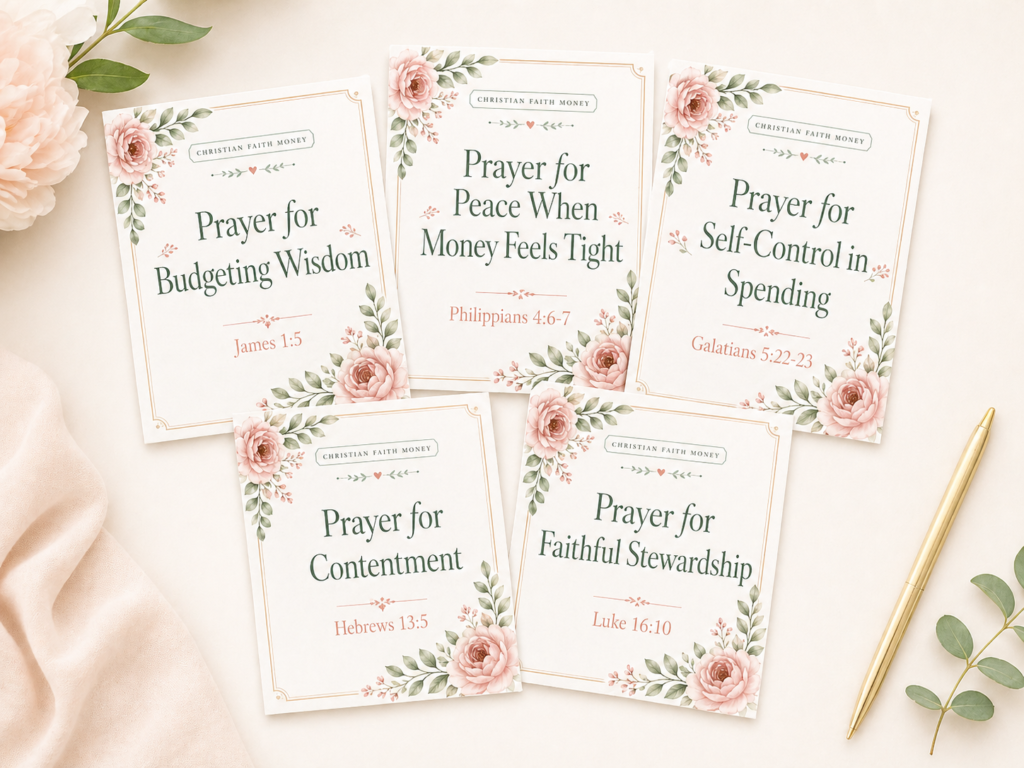
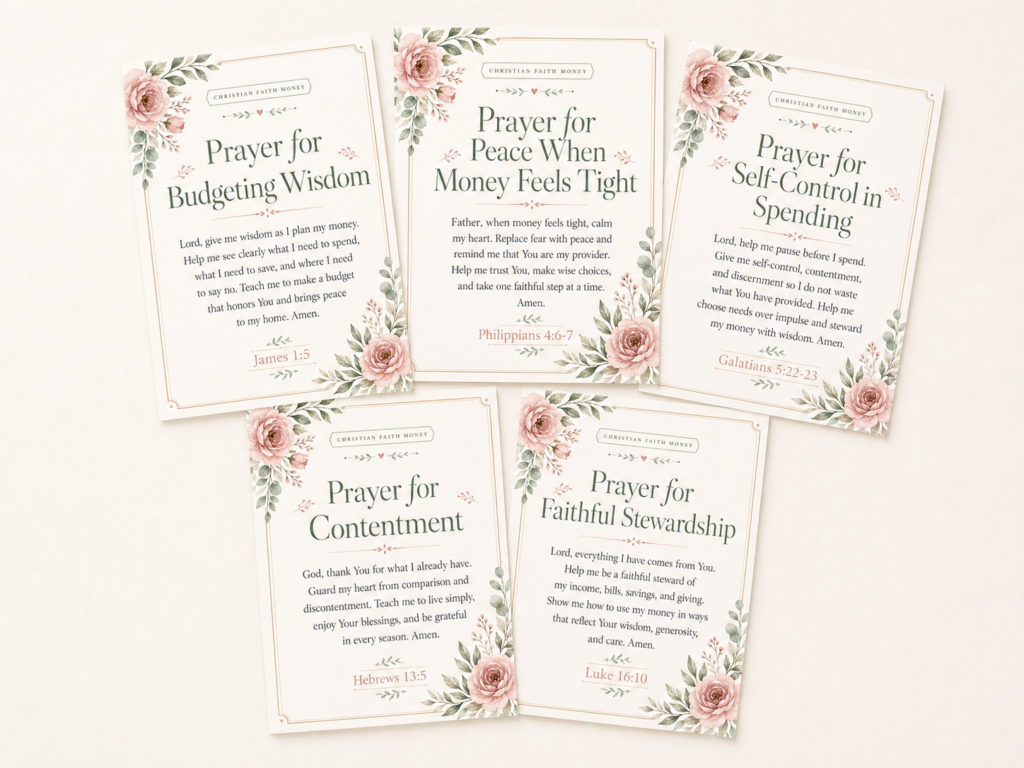
  • Free Prayer Cards for Finances When Money Feels Tight (5 Printable Cards)

    Affiliate disclosure: This post may contain affiliate links, which means I may earn a small commission if you choose to purchase through my link, at no extra cost to you.

    When money feels tight, it can be hard to feel peaceful. Bills, groceries, debt, unexpected expenses, and daily decisions can quickly become overwhelming. In those moments, a simple prayer for finances can help you slow down, invite God into your situation, and take your next step with wisdom instead of fear.

    Prayer does not mean we ignore practical money decisions. Instead, prayer helps us approach budgeting, spending, saving, and giving with a calmer heart and a clearer mind.

    If you are feeling stressed about money today, these five Christian prayers can help you pray over your finances with faith, peace, and biblical wisdom.

    You can also download the free Christian budgeting prayer cards at the end of this post and keep them nearby when you are budgeting, paying bills, meal planning, or making financial decisions.


    1. Prayer for Budgeting Wisdom

    Budgeting can feel stressful when there is not much room left over. But a budget is not meant to create shame. It is simply a plan for how to use what God has placed in your hands.

    When you need clarity, pray for wisdom before you start looking at the numbers.

    Prayer for Budgeting Wisdom

    Lord, give me wisdom as I plan my money. Help me see clearly what I need to spend, what I need to save, and where I need to say no. Teach me to make a budget that honors You and brings peace to my home. Amen.

    Scripture Reference: James 1:5

    If you like having a simple place to organize your bills, spending, savings, and giving, you may also find a budget planner helpful. I personally recommend this budget planner because it gives you one place to see your money clearly instead of trying to keep everything in your head.

    2. Prayer for Peace When Money Feels Tight

    Financial stress can make everything feel urgent. It can cause fear, worry, and even tension in the home. But before you make decisions from panic, take a moment to pray for peace.

    God cares about your daily needs. You can bring your money worries to Him honestly.

    Prayer for Peace When Money Feels Tight

    Father, when money feels tight, calm my heart. Replace fear with peace and remind me that You are my provider. Help me trust You, make wise choices, and take one faithful step at a time. Amen.

    Scripture Reference: Philippians 4:6-7


    3. Prayer for Self-Control in Spending

    Sometimes money stress comes from not having enough. Other times, it comes from spending without thinking. Most of us need God’s help with self-control, contentment, and wise choices.

    Before making a purchase, especially one that is not planned, pause and pray.

    Prayer for Self-Control in Spending

    Lord, help me pause before I spend. Give me self-control, contentment, and discernment so I do not waste what You have provided. Help me choose needs over impulse and steward my money with wisdom. Amen.

    Scripture Reference: Galatians 5:22-23

    One simple way to practice self-control with spending is to write things down before you buy. A budget planner can help you notice patterns, plan ahead, and make more intentional choices with your money.

    If you need a simple planner to help you get started, you can see the one I recommend here:


    4. Prayer for Contentment

    Contentment is one of the most powerful parts of Christian money management. When we compare our homes, clothes, vacations, cars, or lifestyles to others, it can quietly create pressure to spend more than we should.

    A content heart helps us see what God has already provided.

    Prayer for Contentment

    God, thank You for what I already have. Guard my heart from comparison and discontentment. Teach me to live simply, enjoy Your blessings, and be grateful in every season. Amen.

    Scripture Reference: Hebrews 13:5


    5. Prayer for Faithful Stewardship

    Faithful stewardship means remembering that everything we have ultimately belongs to God. Our income, bills, savings, giving, groceries, and daily choices can all be handled with wisdom and care.

    This prayer is a simple reminder to manage money in a way that honors God.

    Prayer for Faithful Stewardship

    Lord, help me be a faithful steward of all You have given me. Guide my spending, saving, and giving so I honor You in every choice. Teach me to manage money with wisdom, gratitude, and trust. Amen.

    Scripture Reference: Luke 16:10


    A Simple Way to Start Praying Over Your Budget

    You do not need a perfect financial system to begin. Start small.

    First, pray. Then look at what is actually happening with your money.

    You may want to write down:

    • what money is coming in
    • what bills are due
    • what you need for groceries
    • what spending needs to slow down
    • what you want to save for
    • what you plan to give

    This is where a simple budget planner can be useful. It gives you a clear place to organize your money decisions so you are not trying to remember everything at once.

    If you are looking for a planner to help you start, It can be a helpful tool for seeing your income, bills, spending, savings, and goals in one place.

    You can view the budget planner here:

    Of course, a planner is just a tool. The real goal is not perfection. The goal is learning to manage your money with wisdom, peace, and faithfulness.


    Download the Free Christian Budgeting Prayer Cards

    I created a free set of Christian budgeting prayer cards to help you pray over your finances with peace and wisdom.

    The free set includes:

    1. Prayer for Budgeting Wisdom
    2. Prayer for Peace When Money Feels Tight
    3. Prayer for Self-Control in Spending
    4. Prayer for Contentment
    5. Prayer for Faithful Stewardship

    You can print them, save them to your phone, tuck them into your Bible, keep them near your budget planner, or use them during your weekly money routine.

    Download the free prayer cards here:


    Final Encouragement

    If money feels tight right now, remember this: you do not have to figure everything out in one day.

    Start with prayer. Ask God for wisdom. Look at what is in front of you. Take one faithful step.

    A simple prayer for finances can help you move from fear to peace, from confusion to clarity, and from pressure to trust.

    And if using a planner helps you feel more organized, that can be a simple practical step too. Prayer and planning can work together. Pray for wisdom, then use the tools that help you steward your money well.

    God sees your needs, your heart, and your desire to manage money faithfully.